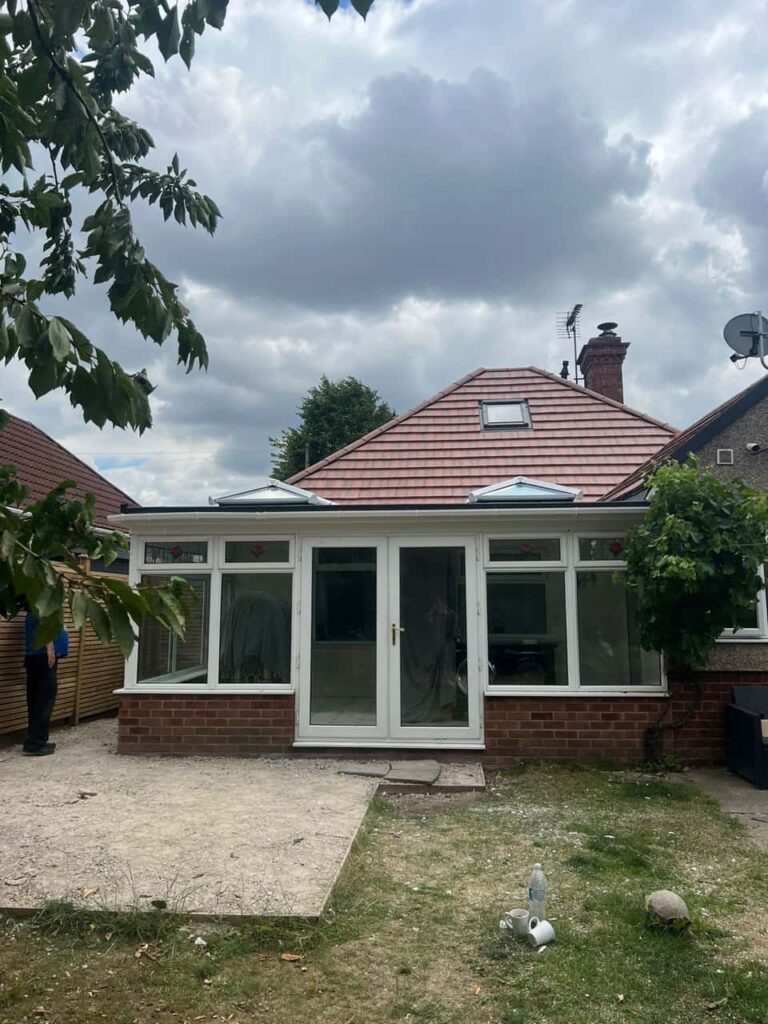
Assessing Whether Multiple Roof Defects Can Still Be Repaired
Damage in several areas does not automatically mean that the entire roof needs replacing. Localised repairs may remain appropriate when the surrounding materials are sound, the underlying structure is stable and each defect has a clearly identifiable cause.
However, widespread or recurring damage can indicate that the roofing system is deteriorating as a whole. For homeowners in Staines-upon-Thames, Surrey, a professional assessment is essential for determining whether targeted repairs, partial renewal or complete replacement is the most suitable response.
The Location of the Damage Matters
Several defects confined to one section of the roof may have a shared cause. For example, damaged tiles around a chimney could relate to failed flashing, deteriorated fixings or water collecting at the junction.
Repairs may still be practical when:
- Damage is limited to one roof slope
- The remaining covering is secure
- Underlay and battens remain serviceable
- The roof structure shows no significant movement
- Replacement materials can be matched appropriately
- The cause can be corrected without disturbing large areas
By contrast, defects appearing across several slopes may suggest more general deterioration.
The Type of Damage Must Be Considered
Not every roofing defect has the same significance. Several cracked tiles may be straightforward to replace, while damaged underlay beneath apparently sound tiles can require more extensive work.
A roof inspection should distinguish between:
- Surface damage to tiles or slates
- Corroded or failing fixings
- Weakened timber battens
- Torn or deteriorated underlay
- Defective lead flashing
- Loose ridge or verge materials
- Damaged roof decking
- Structural movement
The visible covering is only one part of the roofing system. Concealed materials can determine whether repairs will provide a dependable result.
Separate Defects May Have One Underlying Cause
Damage in different locations can sometimes be traced to a common problem. Inadequate fixing, poor installation, drainage faults or repeated wind exposure may affect more than one section.
Replacing individual materials without correcting the root cause may lead to further failure. A professional assessment should establish whether the defects are genuinely isolated or connected by:
- Similar fixing failures
- Widespread material deterioration
- Water travelling beneath the covering
- Poor ventilation
- Movement in the supporting structure
- Incorrect installation details
Understanding this relationship helps avoid a cycle of repeated local repairs.
When Localised Repairs May Be Sufficient
Multiple repairs can still be effective when the roof is generally sound and the defects are limited in scope.
Suitable repair work might include:
- Replacing several broken tiles
- Refitting displaced slates
- Renewing a section of flashing
- Repairing one damaged valley
- Replacing localised sections of underlay and battens
- Securing loose ridge or verge components
- Correcting a specific drainage defect
The repaired areas should integrate properly with the existing roof. Simply patching visible openings without inspecting adjacent materials may leave hidden weaknesses unresolved.
Partial Roof Renewal May Be an Option
Sometimes one roof slope or section has deteriorated more severely than the rest. This may occur because of its orientation, exposure, construction or the presence of several roof junctions.
Partial renewal can be considered when:
- Damage is concentrated in a defined section
- Other slopes remain in reliable condition
- The roof structure can support the proposed work
- New materials can connect correctly with the retained covering
- Junctions and drainage details can be formed effectively
This approach should be based on a careful technical assessment. Renewing one section is not appropriate if the retained areas are already showing widespread failure.
Signs That Full Replacement Should Be Considered
Complete roof replacement may be more suitable when deterioration affects the performance of the entire system rather than a few separate components.
Warning signs include:
- Frequent repairs across several slopes
- Multiple recurring leaks
- Widespread tile or slate failure
- Extensive underlay deterioration
- Numerous weakened or damaged battens
- Large areas of loose fixings
- Sagging or uneven roof lines
- Repeated failure around several junctions
- Difficulty carrying out repairs without damaging neighbouring materials
No single sign confirms that replacement is necessary. The decision should be based on the combined condition of the covering, supporting materials and structure.
Repeated Repairs Can Reveal a Wider Pattern
A roof that requires attention in a different place every few months may no longer be experiencing isolated defects. Instead, the materials could be reaching a stage where failures are becoming progressively more common.
Useful questions include:
- Are new leaks appearing after each repair?
- Are tiles becoming brittle across the roof?
- Do neighbouring materials break when work is carried out?
- Are fixings failing in several locations?
- Has the underlay deteriorated widely?
- Are previous repair areas remaining stable?
A review of the repair history can help determine whether continued local work is likely to remain effective.
Water Damage May Extend Beyond the Visible Areas
Moisture can travel along underlay, battens and roof timbers before becoming visible indoors. Several ceiling marks do not necessarily represent several separate leaks, and one external defect may affect a much wider internal area.
An inspection may need to consider:
- Damp insulation
- Staining on rafters
- Damaged underlay
- Deteriorated battens
- Moisture around chimney junctions
- Water entering through valleys
- Internal marks after particular weather conditions
The full spread of moisture should be understood before the repair scope is decided.
Roof Age Alone Should Not Decide the Outcome
An older roof does not automatically require replacement, just as a relatively new roof is not guaranteed to need only minor repairs. Installation quality, maintenance history, material condition and exposure all influence performance.
A well-maintained older roof may remain suitable for targeted work. Conversely, a newer roof with poor fixing, inadequate detailing or widespread underlay problems may need more extensive correction.
The actual condition of the roof is more important than its age alone.
Why Professional Assessment Is Essential
The difference between repair and replacement cannot be determined reliably from ground level or from an internal damp mark. A professional roofer should inspect the external covering, junctions, drainage and accessible concealed materials.
The assessment should establish:
- The number and distribution of defects
- Whether damage is surface-level or concealed
- The condition of surrounding materials
- Whether previous repairs remain effective
- The cause of recurring problems
- Whether retained sections can continue performing reliably
This evidence provides a sound basis for choosing the least disruptive work capable of resolving the problem properly.
Avoiding Unnecessary Replacement
A professional recommendation should not assume that widespread work is required simply because more than one defect exists. Where sound materials can be retained and repaired effectively, local or partial work may be entirely appropriate.
Equally, continuing to patch a roof that is failing across several connected areas may only postpone the need for a more comprehensive solution. The objective is to select work that matches the roof’s genuine condition.
Conclusion
A full roof replacement is not always necessary when several areas are damaged. Targeted repairs or partial renewal may be suitable when defects are clearly defined and the remaining roof is sound.
Replacement becomes more relevant when damage is widespread, leaks repeatedly return or concealed materials are deteriorating throughout the roof. If your property in Staines-upon-Thames, Surrey, has developed problems in several areas, LS Roofing Staines-upon-Thames can carry out a detailed assessment and recommend an appropriate course of action without assuming that complete replacement is the only option.
Call us on: 01784 775 782
Click here to find out more about LS Roofing Staines-upon-Thames
Click here to complete our contact form and see how we can help with your roofing needs.